.png)
.png)

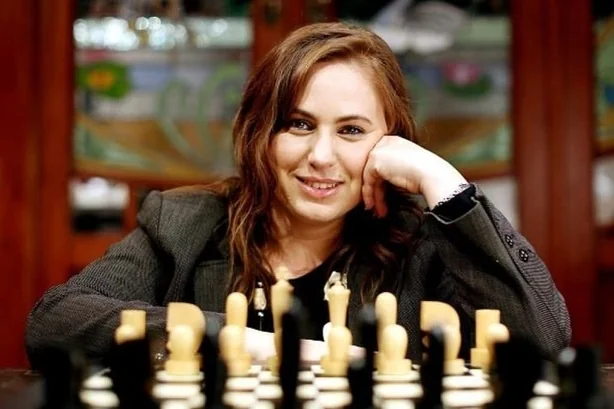
"Judit Polgár is widely recognized as the strongest female chess player in history."
I hate that sentence.
Not because it's wrong. Judit Polgár is the greatest female chess player ever. But the sentence quietly reduces something much bigger. Judit Polgár isn't just the strongest female chess player. She is one of the strongest chess players in history, male or female.
If you don't know who Judit Polgár is, there's a documentary about her on Netflix called Queen of Chess. I'm glad Netflix is telling her story, it's worth telling. It's a story every little girl in the world needs to know.
Which begs the question: how is this story not more famous?
The Netflix documentary Queen of Chess feels almost like a chess fairy tale, except every move really happened. A tiny girl in Hungary sits down at a chessboard, surrounded by pieces twice the size of her hands. Fast forward a few years and she's defeating world champions. That little girl would grow up to become one of the greatest chess players in history.
Judit Polgár's chess journey began incredibly early - she started learning the game at just three years old. But she wasn't alone. Judit grew up in a house where chess was everywhere, and she learned alongside her two older sisters, Susan and Sofia Polgár. The three sisters played constantly: puzzles, games, tournaments, and endless battles against each other.
In many ways, their living room became the ultimate chess training laboratory.
They didn't just study chess - they played people. Each other. Friends. Tutors. Tournament opponents. Over and over again. Win. Lose. Learn. Repeat.
That's actually how the best young chess players develop. You can read books, watch videos, or memorize openings, but eventually you have to sit down across from another human being and play. That's where chess becomes real.
That idea - learning chess by actually playing - is something we see every day with children. It's where all the nutrients reside! Put two children across a board and something magical happens. They start thinking, experimenting, failing, trying again. Whether it's siblings facing off across the kitchen table or classmates battling it out in our club, the real magic of chess happens when kids sit down and play. It's one reason we love introducing children to chess early. When kids learn young and play often, they build creativity, resilience, and problem-solving skills that stay with them for life.
The Netflix film Queen of Chess shows just how powerful that kind of early learning can be. By the time Judit was a teenager, she wasn't just competing, she was shaking the entire chess world.
In 1991, at just 15 years and 4 months old, Judit Polgár became the youngest grandmaster in history, breaking the record held by the legendary Bobby Fischer. For decades Fischer's record had seemed untouchable. Then a teenage girl from Hungary broke it while defying great pressure. That moment alone is worth watching the Netflix documentary Queen of Chess.
But Judit didn't stop there.
At the time, many female players competed mainly in women's tournaments. Judit chose a different path entirely. She played almost exclusively in open tournaments against the strongest players in the world, which meant competing mostly against men.
And she beat them.
Over her career she defeated numerous elite grandmasters and eventually scored a famous victory against Garry Kasparov, the world champion and widely considered the greatest player alive at the time.
Kasparov, along with many chess experts of that era, openly argued that women could never reach the same level in chess as men because of biological differences.
Judit didn't argue about it.
She just kept beating them.
In doing so, she quietly dismantled one of the most persistent myths in chess - that brilliance at the board belongs to one gender.
One of the most enjoyable parts of the Netflix documentary Queen of Chess is watching Judit's personality throughout it all. She plays with joy. She handles devastating losses with perspective. And she even keeps her composure when opponents bend the rules to win.
Ahem… looking at you, Garry Kasparov.
She wasn't trying to prove a political point. She simply lived by a very obvious truth: girls can play chess.
And when they do, they can play it beautifully.
Today Judit Polgár stands not just as the greatest female chess player ever, but as one of the strongest players the game has ever seen. Her story continues to inspire a new generation of girls - and boys - discovering chess for the first time.
At Story Time Chess, we see echoes of this story every day.
Kids learn chess best when they're playing with other people — siblings, classmates, friends, and great tutors guiding the game. That's why we focus so much on real games and real interaction, whether kids are learning in-home, in clubs, or online.
And here's something we're especially proud of: 50% of Story Time Chess students are girls.
That's incredible.
For a game that has historically been male-dominated, seeing classrooms where the board is shared equally by girls and boys feels like watching the future of chess unfold in real time.
It also matters who's sitting on the other side of the board teaching the game. Out of our 126 tutors, 49 are women — nearly 40% of our teaching team. That's more female chess tutors than any other chess company in the world. These coaches are not just teaching openings and tactics — they're showing young players what belonging in chess actually looks like.
And when young girls see someone like them teaching the game, something powerful happens.
They stop wondering if they belong in chess.
They simply start playing.
Our mission is simple: we invite every child - and we mean every child - to experience the profound benefits of chess.
Girls and boys. Kids from every socioeconomic background. Children with all kinds of personalities and learning styles.
Chess belongs to all of them.
And our vision is even bigger.
Every time two children finish a game, shake hands, and say "good game," something important happens. They practice sportsmanship. They learn resilience. They respect their opponent.
At Story Time Chess, we're working toward reaching one million good-game handshakes every year.
Watching Queen of Chess on Netflix reminds us of something important: every grandmaster started the same way.
As a child.
Sitting across a board.
Learning their first move.
And wondering what might happen next. ♟️